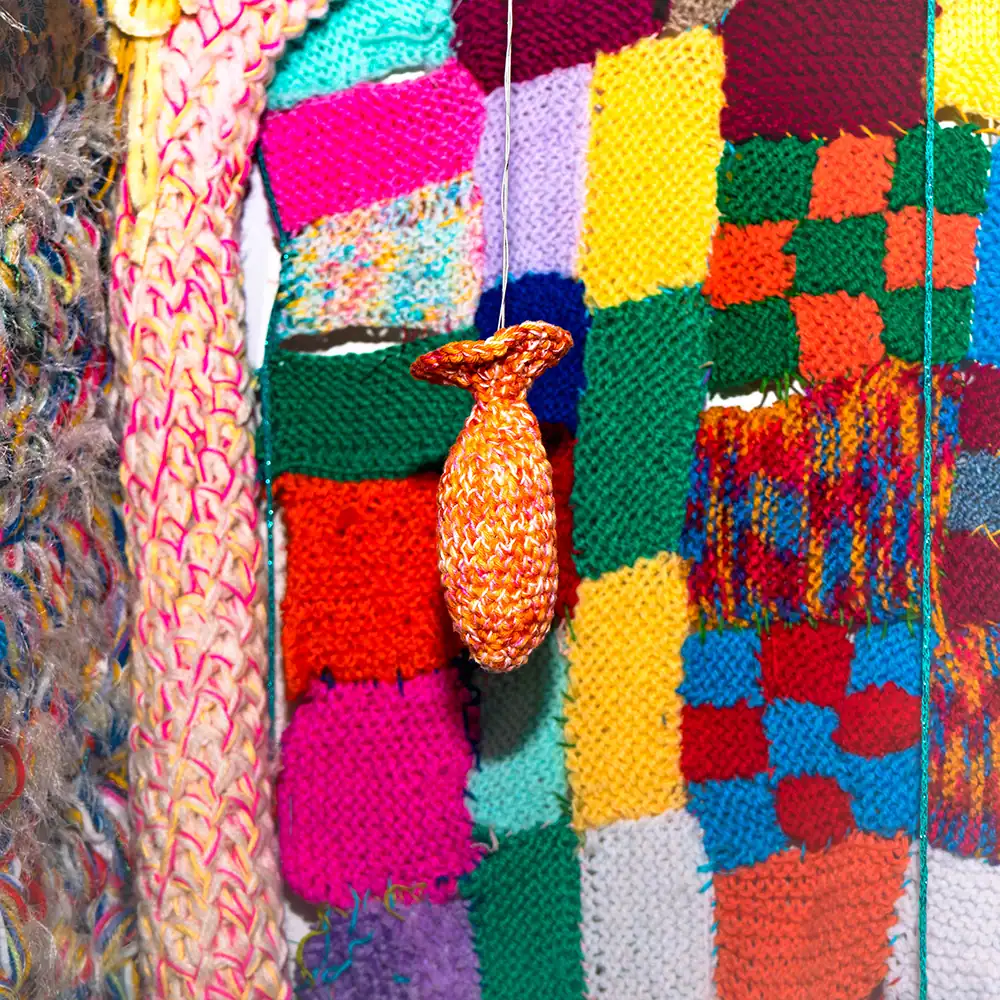
Abigail (AH)
Textiles
“Using brightly coloured crochet, I explore the relationship between restrictive capitalist culture and the light escapism necessary to feel a sense of personhood in an ever-demanding world. Using second-hand materials in my practice is key to its integrity, rejecting consumption practices to ensure the validity of my commentary. I’m influenced by current dialogue around our environmental crisis and artists who aim to bring joy. I’m interested in the idea of collectivized living, sharing space, resources, and knowledge freely for collective improvement, and I believe creating art in ethical and accessible ways moves towards that goal.”
Artist’s links
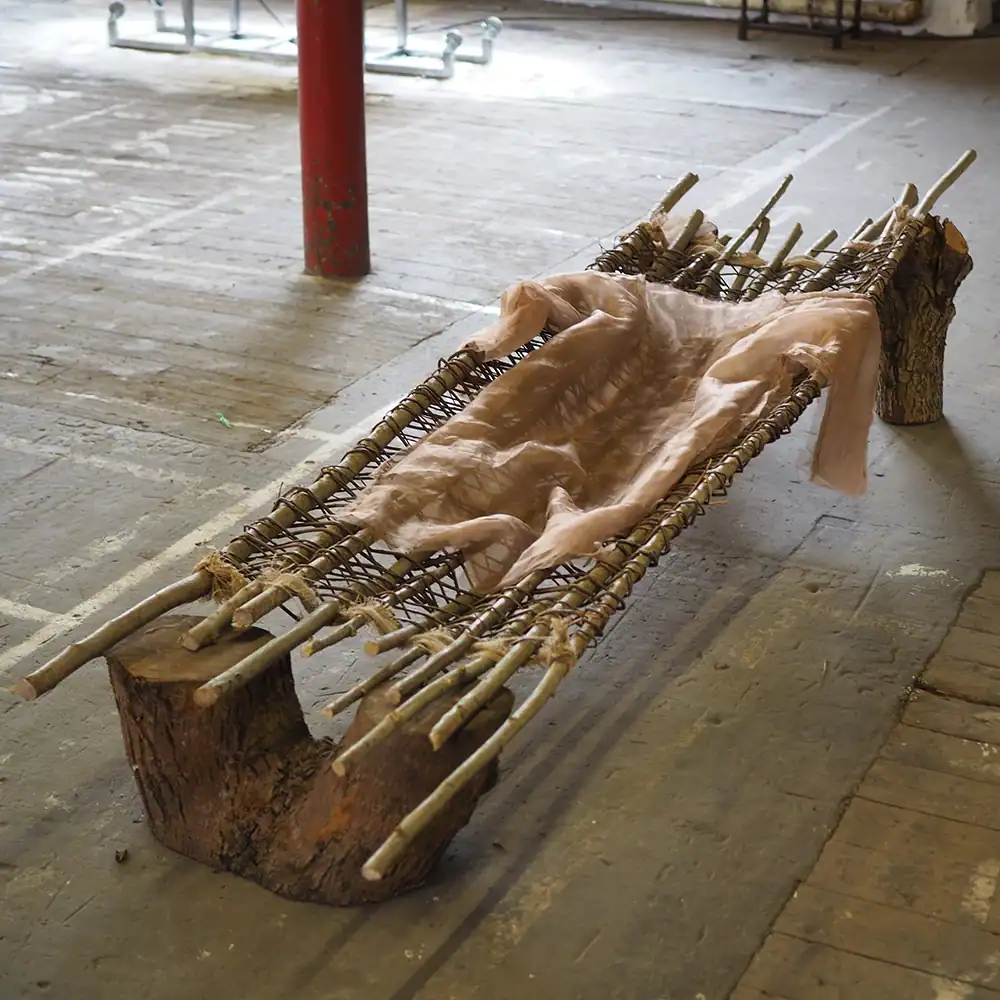
Beth Waite (AH)
Sculpture
“I am an artist based in Leeds, working primarily in sculpture, film and performance. My work centres on both personal and shared experiences of the feminine, its histories and its mysticism, facilitating a connection between the physical and spiritual through feminist structures, ritual and world-building.”
Artist’s links
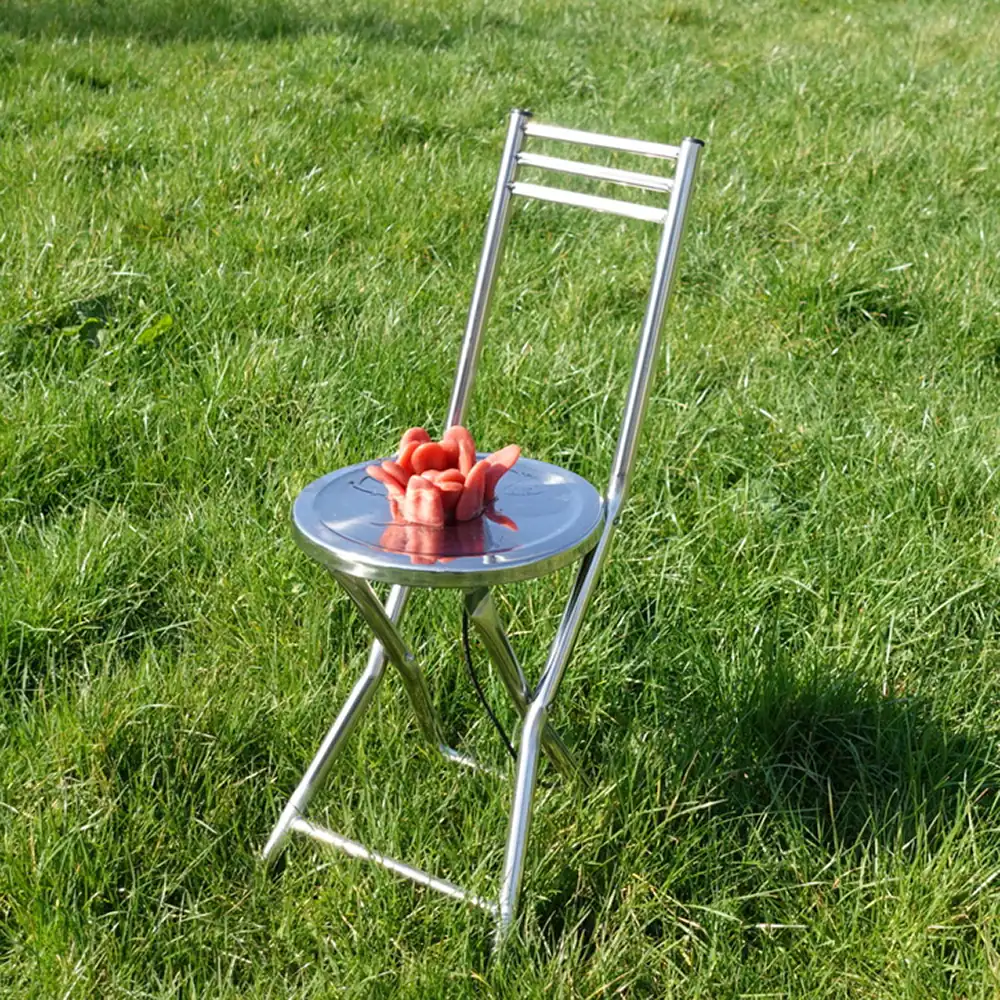
Donglin Song (AH)
Sculpture
“I am a multidisciplinary artist specializing in illustration and sculpture, currently based in Leeds. My work also includes mixed media, focusing on the expression of subtle emotions and the complexities of the human experience.”
Artist’s links
Ella Brereton
Site-specific sculpture
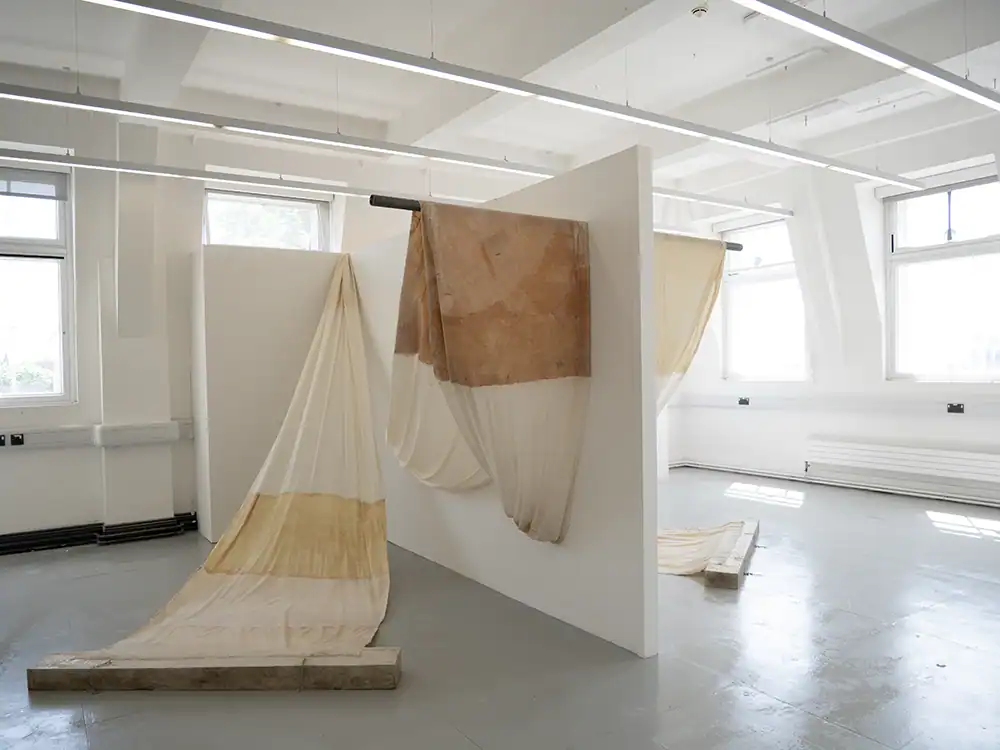
“Our relationship with architecture is in a constant state of flux, with buildings continuously shifting in function. My practice interrogates the mobility of spaces through an exploration of material, capturing moments in a building’s lifespan. Exploring spaces outside my studio enables me to engage a dual creative impulse. One side involves working site-specifically, combining latex and cloth with found elements of the architectural site. A secondary element of my practice grapples with notions of displacement through the relocation of my installations. This process explores how the nature of sculpture shifts when materials are displaced from their context, challenging the capabilities of site-specific practice.”
Artist’s links
Elrick Boldy (AH)
Sculpture
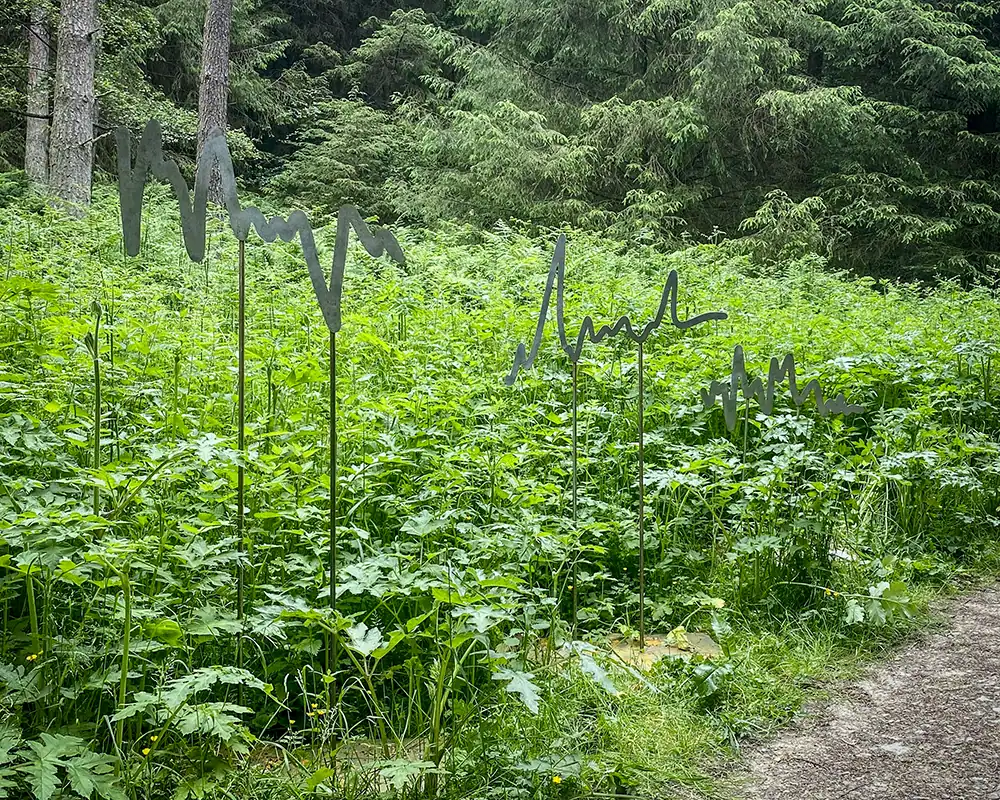
“My work explores the boundaries between written language and shape through patinated, plasma-cut steel. My practice evokes the liminal experience of lost communication through asemic writing. Scrawl-like mark-making is considered, contained, and transformed into sculpture, balancing the industrial nature of steel with organic, gestural shapes.”
Artist’s links
Florence Vallis (AH)
Sculpture
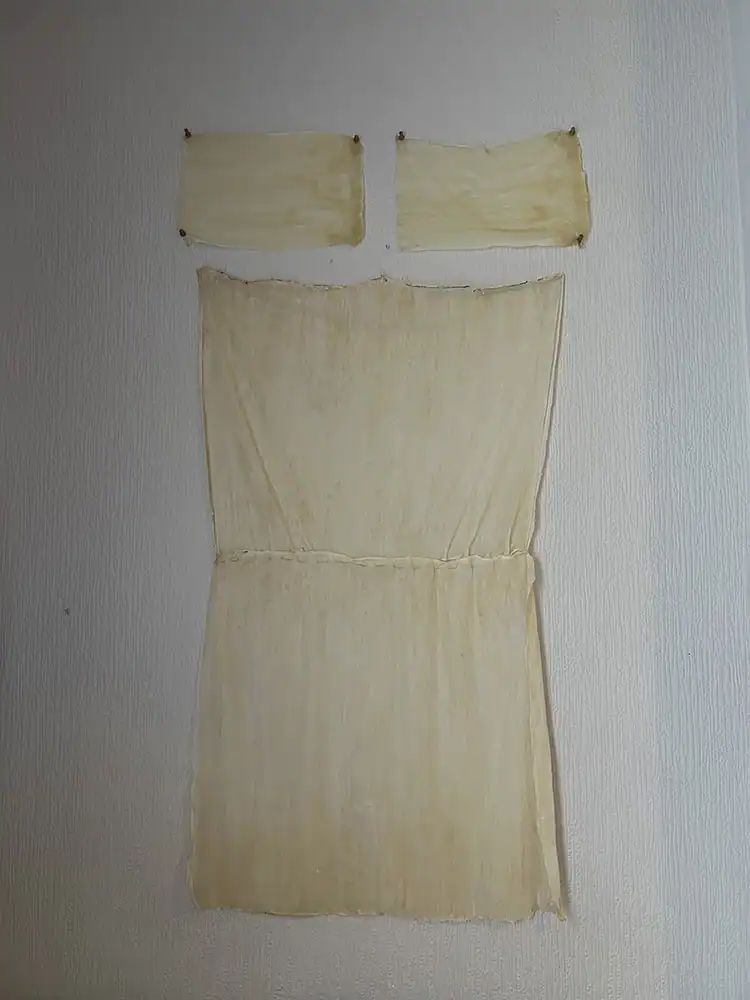
“I am a multi-disciplinary artist working in sculpture, performance and paint with themes exploring disability and identity. The ability to reason is an essential part of being human. I use my work to make sense of myself and what it means to exist within my body. I strive to be sustainable in my art, both in terms of materials and ethics. I interpret myself through mediums and movements. I hold my body ready for inspiration, often coming from the shedding skin of change. Living with chronic illness, certain questions often come to mind. Will I ever catch up? What will be left behind? Whose are the hands that help hold me? I look to answer these through compassionate exploration and self-reflection, disabled theory and aesthetics.”
Artist’s links
James Briggs (AH)
Sculpture
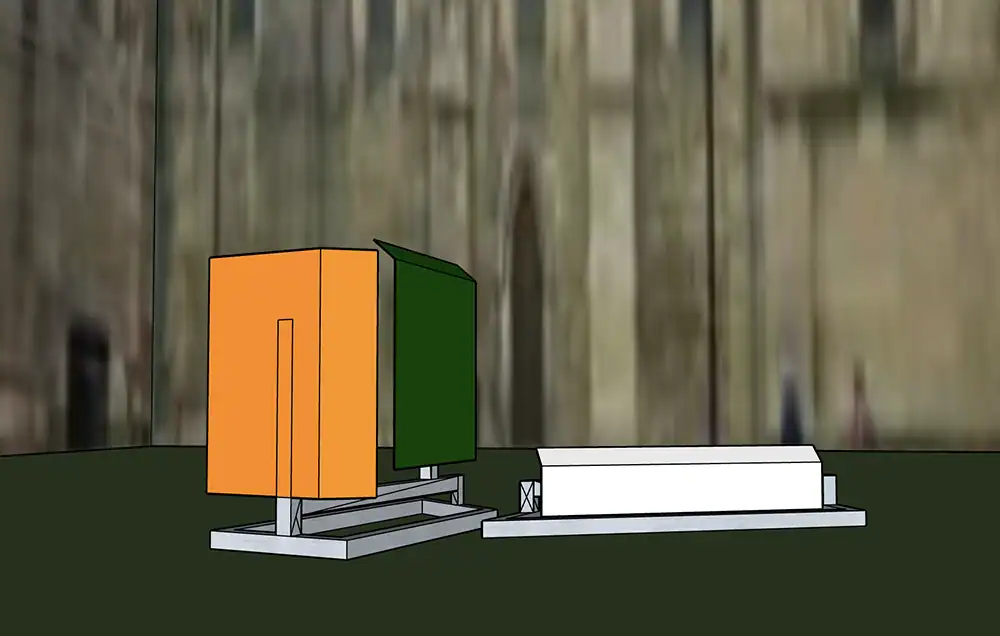
“My sculptures are site-specific, focused on deconstructing and reconstructing spaces to engage viewers with their surroundings. I draw on architectural motifs, abstracting them to evoke emotions tied to time and place. Using colour, line, and mild steel, I invite reflection on the beauty of industrial landscapes and forgotten histories.”
Artist’s links
Kai Brooks (AH)
Oil painting
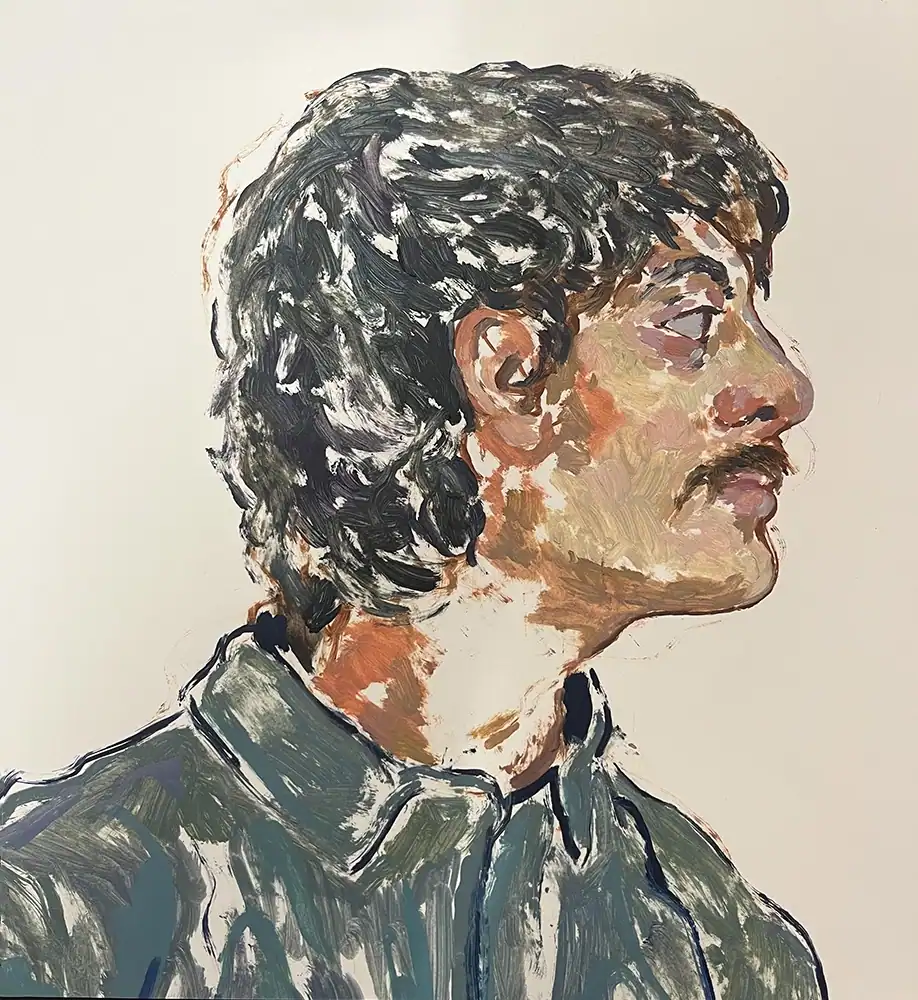
“I am a Coventry-born artist currently based in Leeds, where I graduated from Leeds Art University in 2023. Primarily a painter, I investigate ideas of the self and examine the parallels between love within my social relationships and the intimacy an artist feels for their practice.”
Artist’s links
Lucy Young
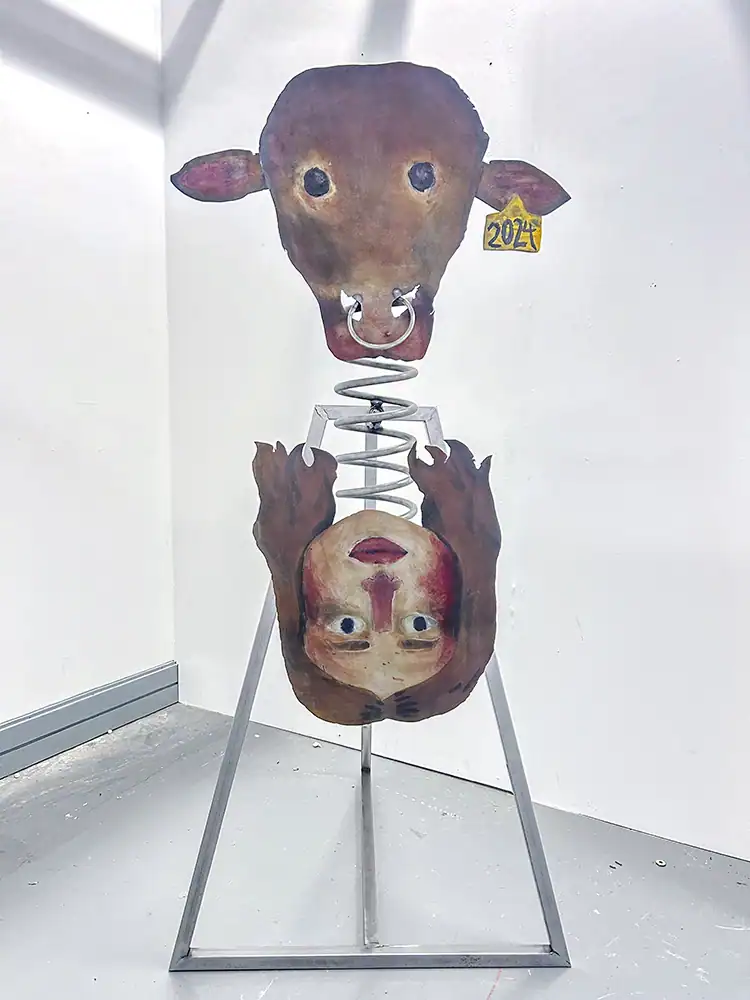
Sculpture / metalwork
“My sculptural practice utilises humour whilst examining all aspects of being young. My figures encompass the good, the bad, and the ugly parts of being young, from grief and homesickness to the overwhelming euphoria produced by dancing and raving.”
Artist’s links
Ruby Jean Waterhouse (AH)
Sculpture / printmaking / installation / drawing / photography
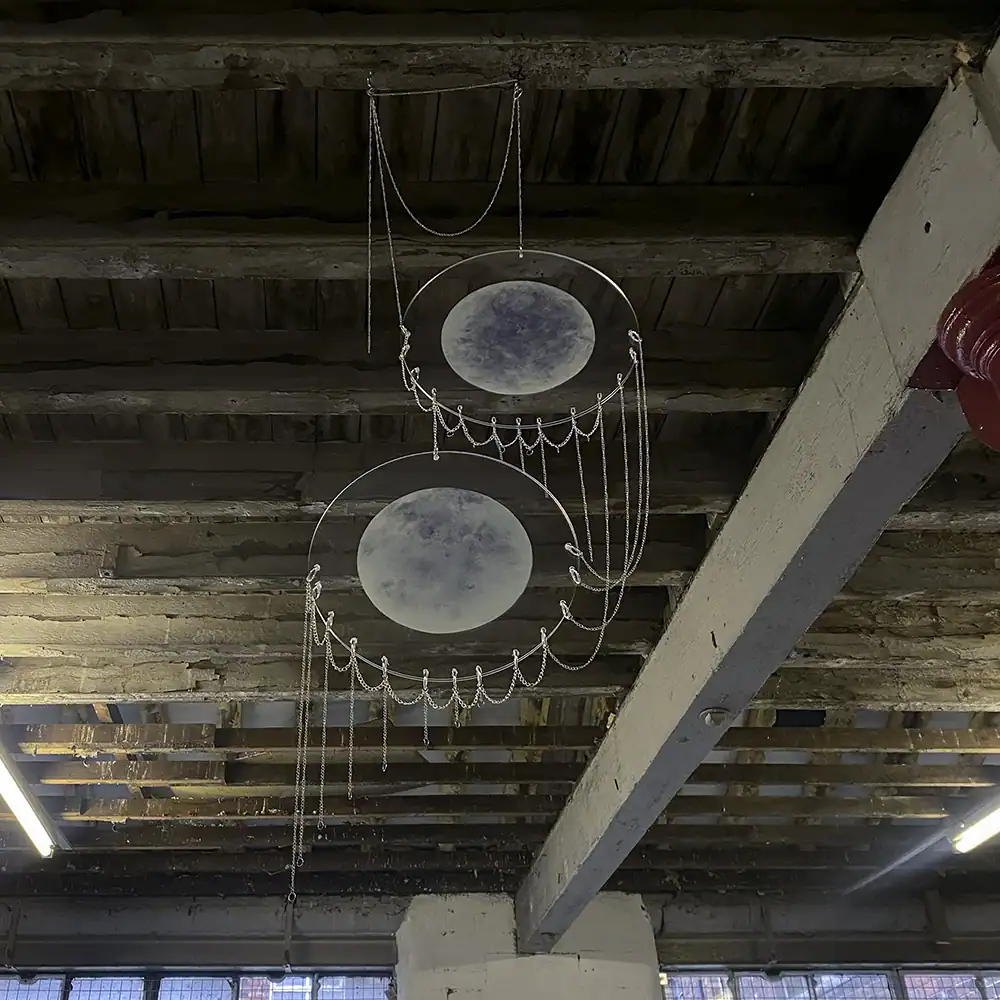
“My practice aims to challenge traditional ways of drawing through video, my body in space, sculpture, installation and print. Traces present themselves as drawings to me; I am interested in the marks left behind from life, nature, humans and movement and what they communicate to us. I am interested in how the world moves around us and what goes unseen. This is represented by my development of the concept Invisible Performance.”
Artist’s links
(AH) Assembly House associated artist
Artist Studios / project space
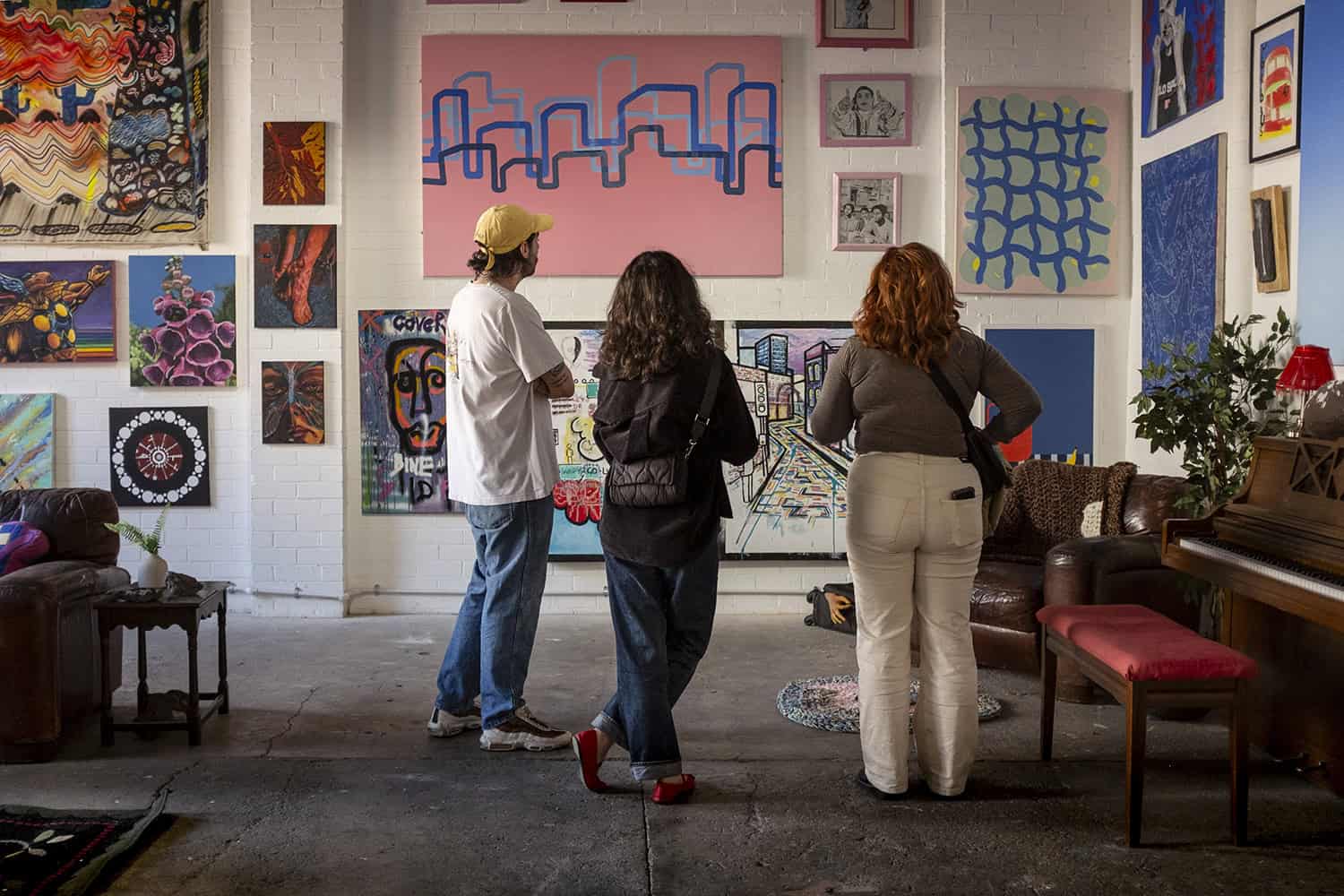
Assembly House is an artist-led community arts organisation, project space, and artist studios. They are based in a Victorian mill beside the Leeds and Liverpool Canal in Armley. They provide affordable studio spaces and support for artists who are early in their careers. They are currently home to 65 artists, with professional practices in a range of disciplines. They also develop creative projects, working with the local community. They hold regular events and exhibitions, showcasing a variety of art forms from both established and emerging artists.
Find out more about Assembly House using the links below:
Note: Kirkstall Abbey closes at 4pm.
Access Guide
Kirkstall Abbey, Abbey Road, Kirkstall, Leeds LS5 3EH
See the main Kirkstall Abbey access guide for more details about the venue.
Approach and entrance
- The entrance to the Refectory is via the Cloisters.
- The entrance is through an archway located midway on the right-hand side of the Cloister (courtyard).
- The ground in the Cloister area is grass with a tarmac path around the edge.
Inside the Abbey’s Refectory
- The ground in the Refectory area is a mix of grass, tiles, and cobblestones and has uneven surfaces.
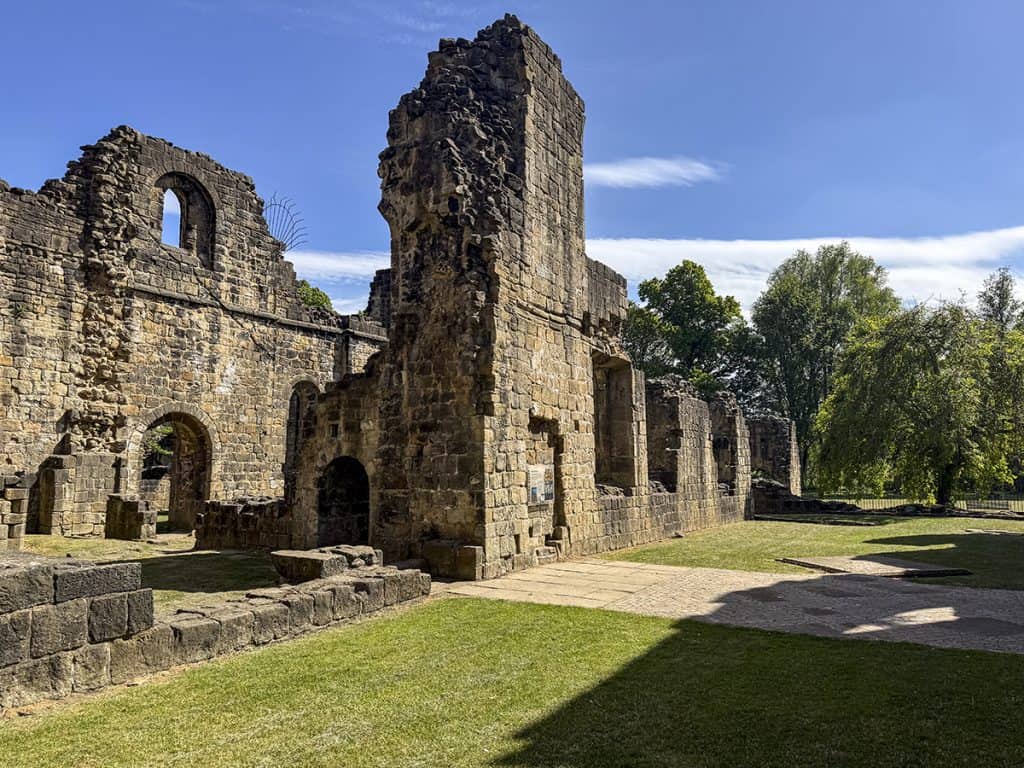
The image below shows the Refectory as viewed from the far end. The Cloister entrance is also visible here, positioned on the left.

See the main Kirkstall Abbey access guide for more details about the venue.
Approach and entrance
- The entrance to the Infirmary is via the Refectory.
- There is an alternative route via the Cloister that avoids steps.
Inside the Abbey’s Infirmary
- The ground in the Infirmary is grass with level stone slabs.
The Infirmary is shown below.

The image below shows the entrance to the Infirmary when you view it from the Refectory.

The image below shows the route from the Cloister (top left entrance) through the Refectory (and Warming House). This view is taken from the entrance shown in the photo above. This route is not step-free.

The image below shows the path through the Infirmary towards the Refectory.

- Both assistance dogs and pet dogs are welcome in the Abbey grounds but must be kept on a lead.
- Dog bowls are available at the front entrance of the café.
- Dogs are allowed in the café, but only assistance dogs are permitted in the Rose Room.
- There are bins available for disposing of dog waste.
- Toilets are located in the shop.
- There are separate male and female toilets.
- A separate gender-inclusive accessible toilet is also available, facilities include:
- handrails on both sides
- an emergency alarm
- a fire alarm with a flashing light
- baby changing facilities
- There is room for a wheelchair to manoeuvre, and space for an assistant.
- This toilet is not RADAR key operated.
- There is a café at Kirkstall Abbey, located in the visitor centre next to the shop.
- The menu includes sandwiches, hot meals, ice cream, and a variety of baked goods.
- Vegan and gluten-free options are available.
- Hot and cold drinks are served, and milk alternatives are available.
- Counter service, but table service can be requested.
- High chairs are available.
- Kirkstall Abbey is a breastfeeding-friendly space.
<< Return to the 2026 Venue Directory
Return to the 2026 Artist Directory >>